 +357 22255000
 Nicosia


Conventional IVF or ICSI? What is the difference?
In IVF treatment, fertilisation takes place in the embryology laboratory. Two of the most common insemination methods are conventional IVF (in vitro fertilization) and ICSI (intra cytoplasmic sperm injection).
Both methods have the same goal: to help the sperm fertilise an egg. The main difference is how the insemination happens.
What is conventional IVF?
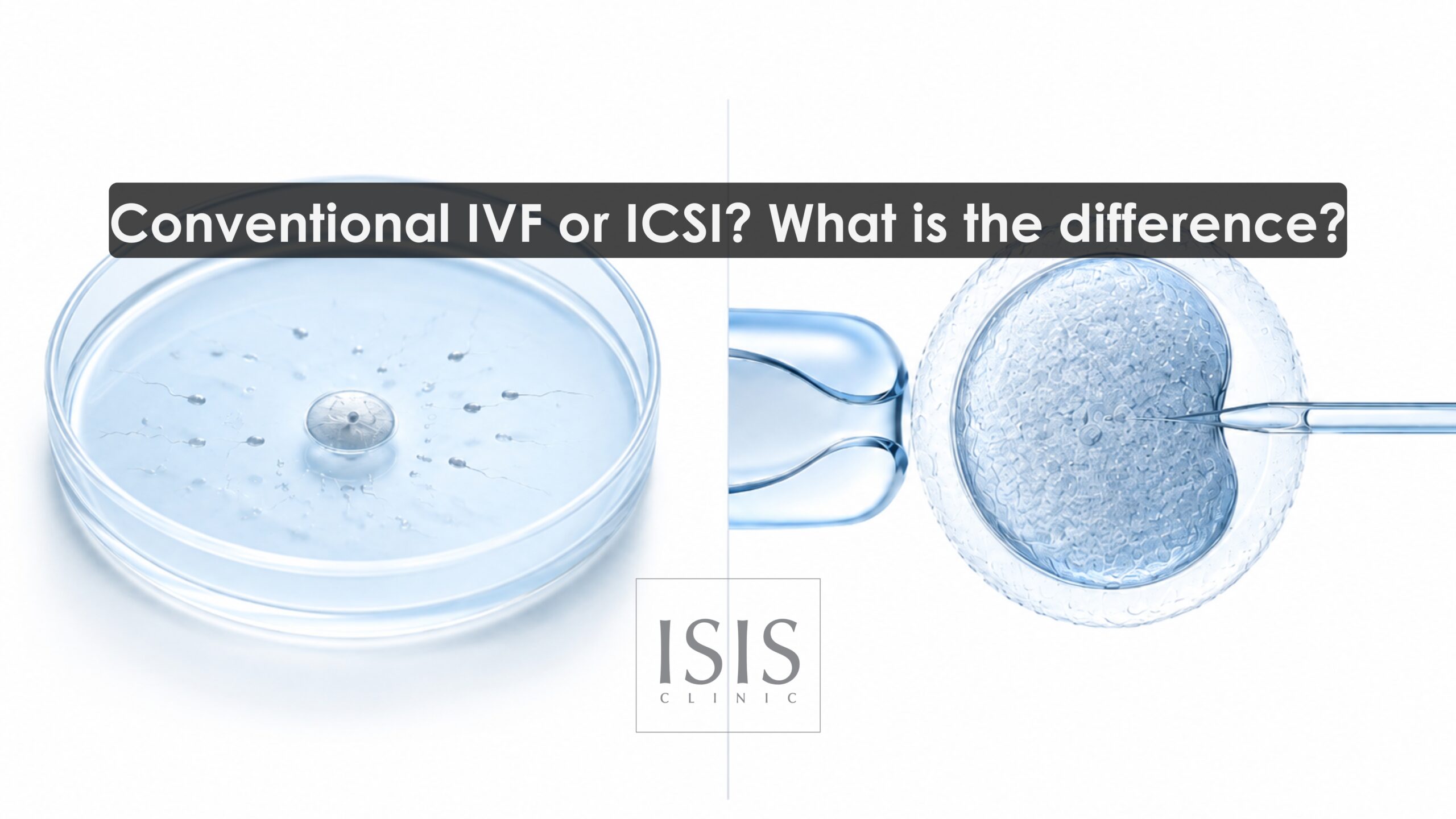
In conventional IVF, the eggs are placed in a special culture dish together with prepared sperm and cultured overnight in a specialized incubator mimicking intra-uterine environmental conditions
The embryologist does not inject the sperm directly into the egg. Instead, the sperm and egg are placed together in a petri dish under carefully controlled laboratory conditions, allowing fertilisation to happen naturally without intervention.
What is ICSI?
ICSI stands for Intracytoplasmic Sperm Injection. It is a more specialised insemination technique.
During ICSI, the embryologist selects a single sperm and injects it directly into the egg using a high powered microscope and specialised micromanipulation equipment.
ICSI may be recommended in cases of low sperm count, reduced sperm motility, previous low or failed fertilisation, frozen eggs, surgically retrieved sperm or when preimplantation genetic testing is planned.
The key difference
In conventional IVF, the egg and sperm are placed together in a petri dish and sperm enters the egg without intervention from an embryologist.
In ICSI, one selected sperm is injected directly into each egg.
The goal is the same. The difference is the method of insemination.
When is each method used?
Conventional IVF may be suitable when sperm quality is good, or in cases of unexplained infertility, tubal factor infertility or ovulation disorders.
ICSI may be recommended when there is male factor infertility, reduced sperm quality, previous failed fertilisation, surgically retrieved sperm, frozen eggs or when preimplantation genetic testing is planned.
Is ICSI always better?
Not necessarily. ICSI is a valuable technique, but it is not always the best option for every couple or every treatment cycle.
The right method is selected individually, based on medical history, egg quality and sperm parameters.
The ISIS Clinic approach
At ISIS Clinic, every treatment cycle is assessed on a case by case basis by our clinical and embryology team and each of our patients is offered a personalized approach based on their individual parameters.
Our aim is to select the most appropriate insemination method for each patient, combining scientific precision, advanced laboratory practice and highly personalised care.
For more information about IVF or ICSI, please contact ISIS Clinic.